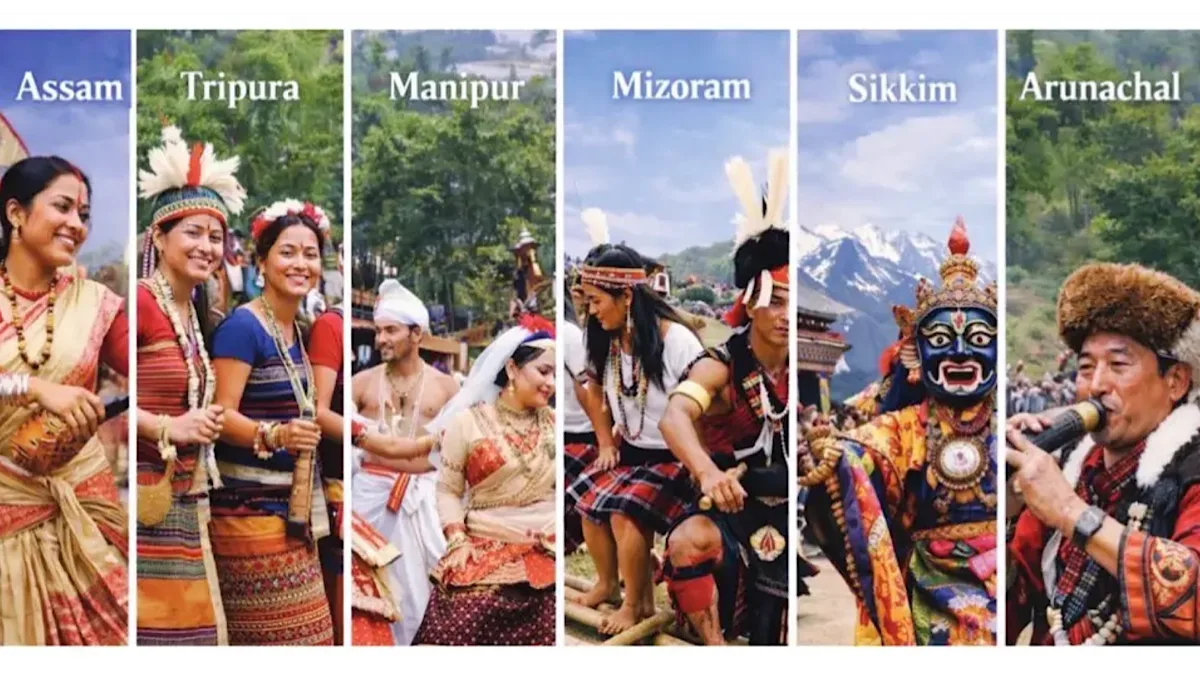
April in North-East India unfolds like a living tapestry of colour, rhythm, and renewal, where nature and culture converge in a shared celebration of life. This region, comprising Assam, Arunachal Pradesh, Nagaland, Manipur, Meghalaya, Tripura, Mizoram, and Sikkim (added in 2002) and known as the Seven Sisters (and one brother), is home to a remarkable diversity of ethnic communities, each with its own traditions, yet united by a deep reverence for seasonal cycles. April, in particular, marks a moment of transition: the end of one agricultural cycle and the hopeful beginning of another.
The festivals celebrated during this time are not merely ritualistic events; they are vibrant expressions of identity, ecological consciousness, and collective memory. Foremost among these celebrations is Bohag Bihu, also known as Rongali Bihu, observed in Assam with unmatched enthusiasm. This festival heralds the Assamese New Year and coincides with the advent of spring. The air resonates with the beats of the dhol and the melodic notes of the pepa, while young men and women dressed in traditional attire perform the energetic Bihu dance. The festival is deeply agrarian in spirit, symbolising fertility, prosperity, and joy. It transcends social boundaries, bringing together people of all ages and communities in a shared celebration of life.
Advertisement
Homes are cleaned, elders are respected, and nature is revered, reflecting a harmonious relationship between human existence and the environment. To the south in neighbouring Tripura, April is marked by two significant celebrations: Pohela Boishakh and Buisu. Pohela Boishakh, the Bengali New Year, is widely observed by Bengali communities. It is a day of renewal, when shopkeepers open new account books in a ritual known as Hal Khata, and people dress in traditional attire to participate in cultural processions and fairs. The festival blends economic practice with cultural expression, symbolising both material and spiritual rejuvenation. Buisu, on the other hand, is the New Year festival of the indigenous Tripuri people. It is characterised by traditional dances, music, and communal feasting, reflecting the agrarian roots of the community.
Together, these festivals illustrate the pluralistic ethos of Tripura, where diverse cultural traditions coexist and flourish. Moving eastward to Manipur, the festival of Sajibu Cheiraoba marks the traditional New Year of the Meitei community. Celebrated with great devotion, the festival involves thorough cleaning of homes, preparation of elaborate meals, and offerings to household deities. A unique aspect of this celebration is the ritual of climbing nearby hills, which symbolises the aspiration for growth and prosperity in the coming year. The act of ascending heights serves as a metaphor for overcoming challenges and striving for a better future.
Sajibu Cheiraoba thus combines spiritual introspection with communal harmony, reinforcing the values of resilience and hope. In India’s northeastern-most state of Arunachal Pradesh, the Mopin festival of the Galo tribe is celebrated in early April with great fervour. This agricultural festival is dedicated to ensuring a bountiful harvest and warding off evil spirits. The rituals involve the application of rice powder, considered a symbol of purity and blessing, and the performance of the graceful Popir dance by women dressed in elegant white attire. Mopin reflects a deep connection with nature and an abiding belief in the cyclical rhythms of life. It underscores the importance of collective participation, as the entire community comes together to invoke prosperity and well-being. Nagaland’s Aoleang festival, celebrated by the Konyak tribe, is another vibrant expression of April’s festive spirit. Held in the first week of the month, Aoleang marks the arrival of spring and the beginning of a new agricultural cycle.
The festival is characterised by traditional dances, songs, and elaborate costumes adorned with beads, feathers, and ornaments. It is a time of feasting and social interaction, where the community reaffirms its cultural identity and shared heritage. The festival also reflects the warrior ethos of the Konyak people, blending elements of history, tradition, and celebration into a dynamic cultural experience. In Meghalaya, the Khasi community celebrates Shad Suk Mynsiem, often described as the “Dance of Peaceful Hearts.” This spring festival is a graceful and dignified expression of gratitude and harmony. Men and women dressed in traditional attire participate in a ceremonial dance that symbolises purity, balance, and respect for nature.
The women, adorned with intricate gold ornaments and silk garments, represent the nurturing aspect of society, while the men embody protection and strength. The festival emphasises moral values and social cohesion, offering a serene contrast to the more exuberant celebrations elsewhere in the region. April in the Seven Sisters of North-East India, therefore, emerges as a season of profound cultural significance. Despite the diversity of languages, customs, and beliefs, these festivals share common themes that bind the region together. They celebrate the renewal of life, the promise of abundance, and the enduring bond between humans and nature. They also serve as platforms for the transmission of cultural knowledge, where traditional music, dance, attire, and rituals are passed down from one generation to the next.
Moreover, these festivals highlight the ecological wisdom embedded in indigenous practices. The timing of the celebrations aligns with agricultural cycles, emphasising sustainability and respect for natural resources. In an era marked by environmental challenges, such traditions offer valuable insights into living in harmony with the earth. They remind us that culture and ecology are not separate domains but interconnected aspects of human existence. Another striking feature of these festivals is their inclusive and participatory nature. They foster a sense of belonging and collective identity, transcending individual differences. In a world increasingly characterised by fragmentation and isolation, such communal celebrations provide a space for connection, empathy, and shared joy. They reaffirm the importance of community as a source of strength and resilience.
The April festivals of North-East India are not merely seasonal events but profound cultural expressions that encapsulate the spirit of the region. They celebrate life in its myriad forms, honour the rhythms of nature, and strengthen the bonds that hold communities together. Through dance, music, ritual, feasts and festivity, they tell stories of continuity and change, of tradition and transformation. As the hills and valleys of the northeast echo with songs of joy and renewal, one is reminded of the enduring power of culture to inspire, unite, and sustain.
(THE WRITER IS A FORMER AFFILIATE FACULTY AT VIRGINIA COMMONWEALTH UNIVERSITY & RETIRED HEAD OF THE POST GRADUATE DEPT OF ENGLISH, DUM DUM MOTIJHEEL COLLEGE)